Rosie O’Donnell Explains Why She Decided to Reveal Secret Facelift: “People Are Lying About Everything”
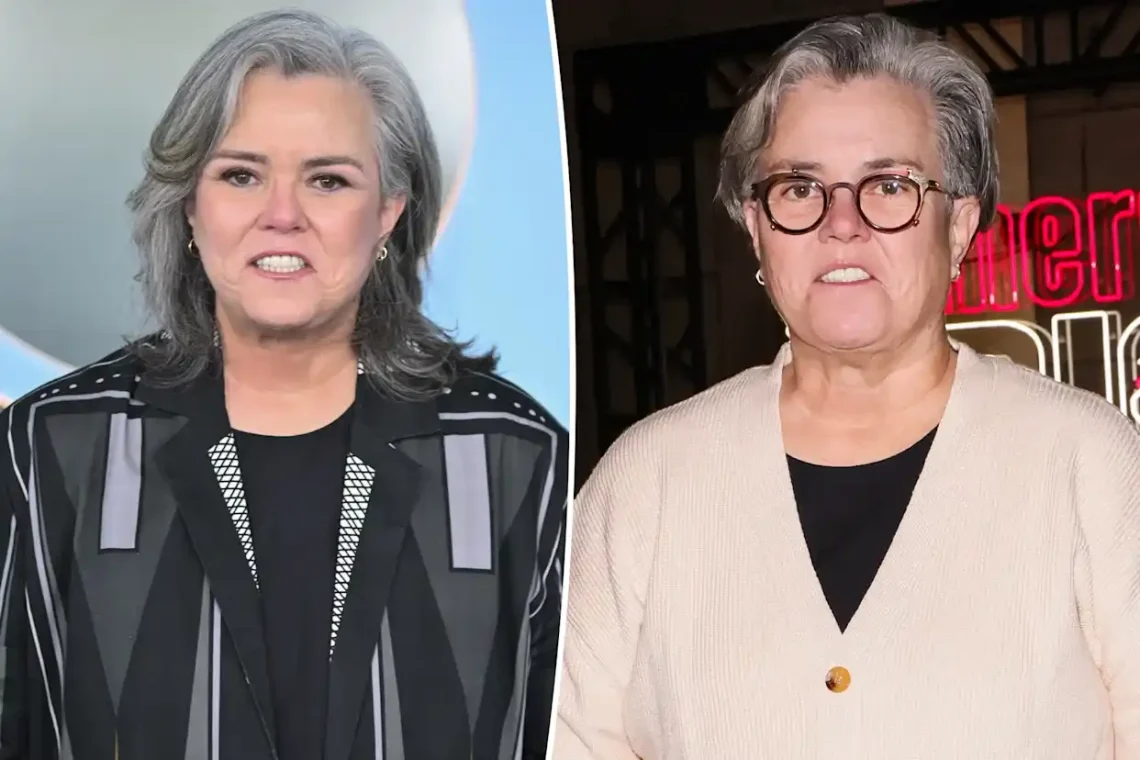
In a media landscape where celebrity appearances are constantly analyzed, filtered, and judged, transparency around cosmetic procedures has become a major talking point. Recently, American comedian and television personality Rosie O’Donnell sparked widespread discussion after opening up about her decision to publicly reveal that she underwent a facelift. Her explanation, summed up in a blunt and emotionally charged statement—“People are lying about everything”—has reignited debates about honesty, beauty standards, and the pressure of aging in Hollywood.
The conversation surrounding her revelation goes far beyond one procedure. It taps into a much larger cultural shift where celebrities are increasingly being questioned not only about how they look, but about how truthful they are regarding the methods behind their appearance. In an industry built on image, control, and perception, even a simple admission can become a major headline.
A Public Figure Confronts Private Choices
Rosie O’Donnell has spent decades in the public eye, building a career that spans stand-up comedy, television hosting, acting, and outspoken commentary on social and political issues. Throughout her career, she has never been known for carefully curating a silent or distant public persona. Instead, she has often spoken directly and candidly about personal experiences.
Her decision to reveal her facelift fits into this broader pattern of openness. However, what makes this moment particularly significant is not just the procedure itself, but the reasoning behind her decision to speak about it publicly.
According to her explanation, the choice to disclose the facelift was rooted in frustration with what she perceives as widespread dishonesty in the entertainment industry and online culture. Her statement—“People are lying about everything”—suggests a broader critique of how beauty, aging, and cosmetic enhancements are discussed in public spaces.
The Growing Pressure of Appearance in Hollywood
The entertainment industry has long been associated with intense pressure to maintain a youthful and polished appearance. For women in particular, aging in the public eye often comes with scrutiny that male counterparts are less frequently subjected to.
In recent years, there has been a noticeable increase in celebrities choosing to openly discuss cosmetic procedures, ranging from minimally invasive treatments like Botox and fillers to more significant surgical interventions such as facelifts and body contouring.
This shift toward transparency reflects changing audience expectations. Modern viewers are more aware of digital editing, filters, and cosmetic enhancements than ever before. As a result, there is growing skepticism toward “effortless beauty” narratives often portrayed in media.
Rosie O’Donnell’s comments tap directly into this cultural tension. By calling out dishonesty, she is aligning herself with a broader conversation about authenticity in a highly curated industry.
Why Celebrity Facelift Revelations Get So Much Attention
When a celebrity reveals cosmetic surgery, it often becomes headline news—not because the procedure itself is rare, but because of what it symbolizes. A facelift, in particular, is associated with aging, reinvention, and visibility.
Unlike non-invasive procedures that are often normalized or casually acknowledged, facelifts still carry a degree of stigma in certain public conversations. Some celebrities choose to deny or avoid discussing them altogether, while others embrace openness as part of a broader authenticity narrative.
In Rosie O’Donnell’s case, the reaction has been amplified by her candid framing of the issue. Her assertion that “people are lying about everything” elevates the story beyond personal choice and into a critique of celebrity culture itself.
This transforms the narrative from a simple personal update into a broader cultural statement.
The Role of Honesty in Modern Celebrity Culture
In the past, celebrity public relations teams often advised silence or denial regarding cosmetic procedures. The goal was to maintain the illusion of natural beauty and avoid public scrutiny.
However, the rise of social media has fundamentally changed this dynamic. Audiences now have access to behind-the-scenes content, interviews, candid photos, and real-time updates that make it harder for celebrities to maintain strict control over their image.
As a result, honesty has become a form of currency. Celebrities who openly acknowledge cosmetic work are often praised for being “real” or “relatable,” while those who remain silent sometimes face speculation or criticism.
Rosie O’Donnell’s decision to speak openly fits into this new environment where transparency can sometimes be more valuable than perfection.
“People Are Lying About Everything”: A Broader Cultural Critique
The most striking part of O’Donnell’s statement is not the admission of surgery, but the broader accusation embedded within it. By saying “people are lying about everything,” she is pointing to what she sees as a widespread lack of honesty in how public figures present themselves.
This sentiment resonates with ongoing discussions about filters, photo editing, and curated social media identities. In many ways, the modern celebrity image is no longer just about physical appearance—it is about digital construction.
Platforms like Instagram and TikTok have blurred the line between reality and enhancement. Filters can smooth skin, alter facial structure, and adjust lighting in ways that make physical appearance highly fluid.
Within this environment, the distinction between natural aging and assisted appearance becomes increasingly difficult to define.
Aging in the Public Eye
Aging is a universal human experience, but in Hollywood, it is often treated as something to be managed rather than embraced. Public figures frequently face pressure to maintain a consistent appearance over decades, even as natural aging processes continue.
For women in entertainment, this pressure can be especially intense. Career opportunities, public perception, and media coverage are often influenced—directly or indirectly—by appearance.
Cosmetic procedures like facelifts are one of many tools used to navigate this reality. While some choose surgical intervention, others rely on skincare routines, non-invasive treatments, or simply embrace natural aging.
Rosie O’Donnell’s openness adds another layer to this conversation by highlighting the emotional and social dimensions behind such decisions.
Public Reaction and Online Debate
As with most celebrity revelations, public response has been divided. Some fans have praised O’Donnell for her honesty and willingness to speak openly about a subject that is often hidden. Others have questioned whether such disclosures should be necessary in the first place, arguing that personal medical decisions should remain private.
A third group has focused more on her broader statement about dishonesty, interpreting it as a commentary on the entertainment industry’s long-standing relationship with image management.
This range of reactions reflects a larger societal debate: should celebrities be expected to disclose cosmetic procedures, or should appearance remain a private matter?
There is no consensus, and opinions often vary depending on cultural perspective, age, and personal values.
The Changing Narrative Around Cosmetic Surgery
Over the past decade, cosmetic surgery has become increasingly normalized in public discourse. Influencers, reality TV stars, and mainstream celebrities alike have contributed to a gradual shift in how these procedures are perceived.
What was once considered taboo is now often discussed in interviews, podcasts, and social media posts. In some cases, celebrities even document their recovery journeys, turning personal medical experiences into content.
However, despite this growing openness, there is still inconsistency in how transparency is practiced. Some public figures are fully open about their procedures, while others remain silent or ambiguous.
Rosie O’Donnell’s remarks highlight this inconsistency, suggesting that the lack of uniform honesty contributes to public mistrust.
Media Responsibility and the Amplification of Beauty Narratives
The media plays a significant role in shaping how cosmetic procedures are perceived. Headlines often emphasize “new looks,” “dramatic transformations,” or “unrecognizable appearances,” which can reinforce unrealistic expectations about aging and beauty.
At the same time, entertainment coverage frequently oscillates between admiration and scrutiny, depending on how a celebrity chooses to present themselves.
In this environment, transparency can become both a shield and a spotlight. Celebrities who disclose procedures may face less speculation, but they also risk increased attention on their physical appearance.
O’Donnell’s decision to speak openly places her directly within this complex media ecosystem.
Why This Story Resonates Beyond Celebrity Gossip
Although the topic originates in entertainment news, it resonates far beyond celebrity culture. At its core, this story touches on universal themes: honesty, identity, aging, and the pressure to meet societal expectations.
Many people, regardless of fame, grapple with similar questions about appearance and authenticity. The difference is that celebrities experience these pressures on a public stage, where every change is visible and often discussed.
This shared human element is part of what makes stories like this so widely discussed and emotionally engaging.
Conclusion: A Conversation Bigger Than One Procedure
Rosie O’Donnell’s decision to reveal her facelift, along with her pointed remark that “people are lying about everything,” has sparked more than just entertainment headlines. It has contributed to an ongoing cultural conversation about truth, appearance, and transparency in a highly visual world.
Whether one agrees with her perspective or not, her statement highlights a growing tension between curated digital identities and real-life experiences. In an era where images can be endlessly edited and narratives carefully controlled, honesty itself has become a central issue in public discourse.
Ultimately, this story is not just about cosmetic surgery. It is about how society defines authenticity, how celebrities navigate visibility, and how audiences interpret the images they see every day.
As discussions about beauty standards and transparency continue to evolve, moments like this ensure that the conversation remains active, complex, and far from settled.


You May Also Like
KATSEYE’s Sophia Laforteza Steps Back From European Tour Amid Group Hiatus
Harry Jowsey Sets the Record Straight on Amber Mozo Wedding: Why the ‘Let’s Marry Harry’ Marriage Wasn’t as Simple as It Looked