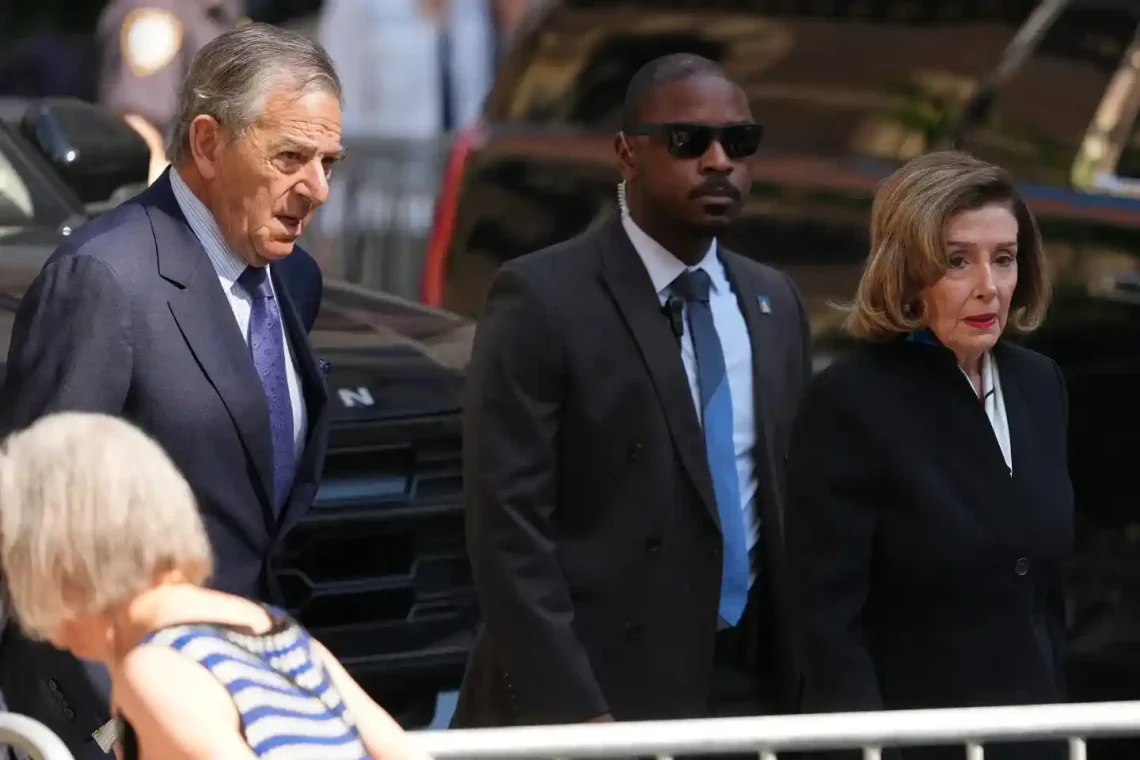
Nancy Pelosi’s Husband Hit-and-Run Case: Allegations, Legal Fallout, and What It Means for His Driving Privileges
Introduction: When Political Fame Meets Legal Trouble
Few political families in the United States attract as much attention as the household of former U.S. House Speaker Nancy Pelosi. As one of the most influential figures in modern American politics, anything connected to her name tends to generate widespread media coverage. That includes legal issues involving her family members, particularly her husband, Paul Pelosi.
In recent years, Paul Pelosi has been at the center of public scrutiny following a traffic-related incident in Napa County, California. The case involved allegations of driving under the influence and a collision described in reports as a hit-and-run situation. While the legal process has already played out in court, the story continues to circulate in public discussion due to its connection to a major political figure and the consequences it carries for driving privileges, reputation, and public trust.
This article breaks down what happened, how the legal system responded, what penalties were involved, and why the case continues to attract public interest.
What Happened: The Incident in Napa County
The incident occurred in Napa County, California, where Paul Pelosi was involved in a vehicle collision late at night. According to official reports, his vehicle collided with another car on a rural roadway. After the crash, he was accused of briefly stopping but then continuing driving before law enforcement contact was made.
Authorities later arrested him on suspicion of driving under the influence. The case quickly escalated due to two key factors:
- The involvement of alcohol-related impairment allegations
- The accusation that he left the scene of a collision
These two elements are commonly associated with more serious legal consequences in California traffic law, especially when combined.
The driver of the other vehicle was not reported to have suffered life-threatening injuries, but the incident triggered a full investigation by local authorities.
The Legal Charges and Court Process
After the incident, Paul Pelosi faced legal proceedings in Napa County court. The case primarily centered on DUI-related charges and the circumstances surrounding the collision.
In California, DUI cases typically involve:
- Blood alcohol concentration (BAC) evidence
- Field sobriety test results
- Accident reconstruction reports
- Statements from law enforcement officers
Rather than going through a prolonged trial, the case ultimately resulted in a legal resolution through court sentencing.
He was convicted of DUI-related offenses and received penalties that included:
- Probation
- Mandatory DUI education program
- Fines and court fees
- Installation of an ignition interlock device
- Temporary suspension of driving privileges
While the exact duration of license suspension depends on court and DMV coordination, California law allows administrative suspension even when criminal sentencing is completed.
License Consequences: Could He Lose His Driving Privileges?
One of the most widely discussed aspects of the case is the impact on driving privileges. In California, DUI convictions often result in a layered penalty system involving both criminal court and the Department of Motor Vehicles (DMV).
For Paul Pelosi, the consequences typically include:
Administrative Suspension
The DMV may suspend a driver’s license shortly after arrest if BAC levels exceed legal limits or if a refusal to test occurs.
Court-Ordered Suspension
After conviction, courts can impose additional restrictions, including extended suspension periods or restricted driving permits.
Restricted Driving Programs
In some cases, drivers may regain limited driving privileges through an ignition interlock program, which requires a breath test before starting the vehicle.
Long-Term Impact
Even after reinstatement, DUI convictions can remain on driving records for years and may affect:
- Insurance premiums
- Driving record classification
- Future legal penalties if another violation occurs
So while the phrase “could cost him his license” is often used in headlines, the reality is more nuanced: in many DUI cases, the license is suspended temporarily rather than permanently revoked, unless repeated offenses occur.
Public Reaction and Media Attention
Because the case involves the spouse of Nancy Pelosi, media coverage extended far beyond typical local legal reporting. The story became part of national political discussion, with commentary divided along several lines:
1. Political Lens
Some coverage framed the incident through a political perspective, linking it indirectly to broader debates about accountability and privilege among public figures.
2. Legal Neutrality Perspective
Other outlets emphasized that DUI laws apply regardless of political affiliation or social status, highlighting that the legal process followed standard procedure.
3. Public Curiosity Factor
A significant portion of attention came from the public’s general interest in high-profile families. Incidents involving well-known figures often receive amplified coverage, even when legally similar cases involving private citizens receive minimal attention.
Media Framing: Why This Story Spread Quickly
There are several reasons this case gained widespread traction:
High-Profile Association
The connection to a former House Speaker automatically places the story into national relevance.
Sensational Keywords
Terms like “hit-and-run” and “DUI” are highly searchable and tend to drive engagement online.
Political Climate
In a polarized political environment, stories involving public figures often become symbolic narratives rather than purely legal updates.
Ongoing Interest in Accountability
There is a broader cultural focus on how the legal system handles cases involving influential individuals and their families.
Understanding Hit-and-Run Allegations in Context
It is important to understand what “hit-and-run” means legally. In California, a hit-and-run charge does not always imply intentional wrongdoing in the sense of fleeing a major crime scene. It can involve:
- Failing to remain at the scene long enough to exchange information
- Delayed reporting of a collision
- Leaving before law enforcement arrival
These distinctions matter in legal interpretation. In many cases, the severity of charges depends on intent, injury level, and cooperation after the incident.
In Paul Pelosi’s case, the legal outcome was handled through DUI-related sentencing rather than extended criminal litigation for separate felony charges, indicating how the court categorized the event within statutory frameworks.
The Role of Public Figures in Legal Scrutiny
When incidents involve individuals connected to major political leaders, scrutiny increases significantly. This raises broader questions about how public perception interacts with legal reality.
Key factors include:
Increased Media Visibility
Public figures and their families are subject to higher levels of reporting, even for routine legal matters.
Expectation of Accountability
There is often a public expectation that high-profile individuals will face equal or heightened accountability under the law.
Privacy vs. Public Interest
Balancing personal privacy with public interest becomes more complex when political leadership is involved.
In this case, although Paul Pelosi is not a public officeholder, his association with Nancy Pelosi places him within a sphere of public attention.
Legal and Personal Consequences Beyond the Courtroom
Beyond fines and legal penalties, DUI cases often have broader impacts that extend into personal life and public perception.
Insurance Impact
Drivers with DUI convictions often face significantly higher insurance premiums or difficulty obtaining coverage.
Reputation Effects
For individuals connected to public officeholders, reputational consequences can be amplified by media attention.
Travel and Licensing Restrictions
Some jurisdictions impose additional restrictions on drivers with DUI histories, including monitoring or interlock requirements.
Personal Responsibility Programs
Court-ordered DUI education programs aim to reduce repeat offenses and address behavioral factors contributing to impaired driving.
Broader Lessons from the Case
While this case gained attention due to political association, it also highlights broader social and legal lessons:
1. DUI Laws Apply Universally
Regardless of status, DUI laws are enforced under the same legal framework in California and across the United States.
2. Legal Consequences Are Layered
Penalties often involve both administrative and criminal systems working together.
3. Media Amplification Shapes Perception
High-profile connections can transform a local legal case into national news.
4. Driving Privileges Are Conditional
A driver’s license is not an absolute right; it is contingent on compliance with safety laws and regulations.
Conclusion: Why This Story Continues to Resonate
The case involving Paul Pelosi remains a widely discussed example of how personal legal issues can become public narratives when tied to political figures. While the legal system addressed the matter through standard DUI procedures and penalties, public interest continues due to the broader context surrounding his family connection to Nancy Pelosi.
Ultimately, the incident serves as a reminder that traffic laws carry serious consequences, especially when impaired driving is involved. License suspension, fines, and mandatory programs are designed not only as punishment but also as preventive measures to reduce future risk on the road.
In the end, the story is less about political identity and more about how everyday legal standards apply universally—even when the individuals involved live under intense public scrutiny.


You May Also Like

Paris Jackson Demands Nearly $3 Million From Michael Jackson’s Estate: Inside the Family Dispute Over His Legacy

Harry Jowsey Sets the Record Straight on Amber Mozo Wedding: Why the ‘Let’s Marry Harry’ Marriage Wasn’t as Simple as It Looked