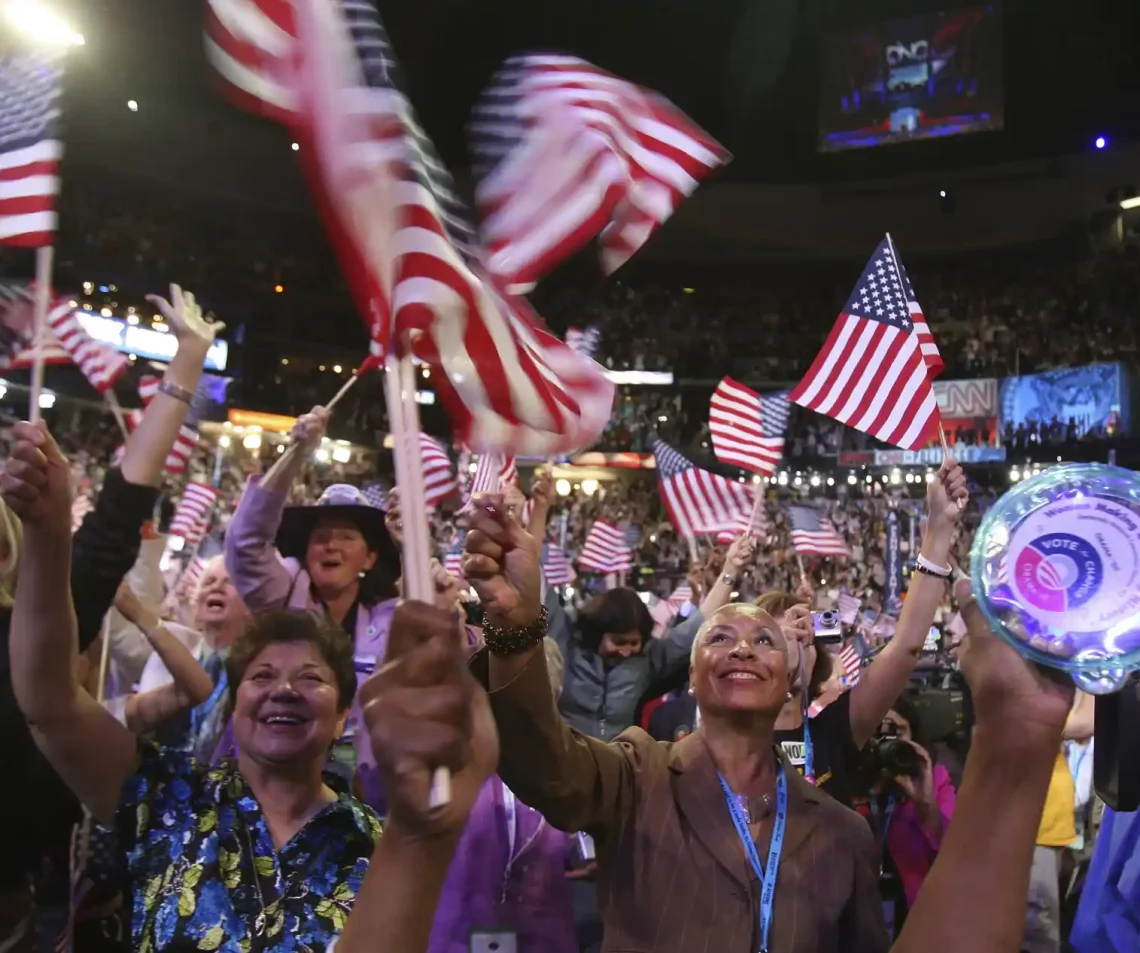
Women’s Equality Day: Honoring the Past and Shaping a More Equal Future
Why Women’s Equality Day Still Matters
Every year on August 26, Americans observe Women’s Equality Day, a date that recognizes one of the most important milestones in the history of women’s rights in the United States: the certification of the 19th Amendment in 1920. The amendment prohibited denying the right to vote based on sex, marking a major victory for the women’s suffrage movement after decades of organizing, protest and advocacy.
But Women’s Equality Day is about more than remembering a constitutional amendment from more than a century ago. It is also an opportunity to consider how far women have come, recognize the barriers that remain and think about what equality should look like for future generations.
A recent opinion published by Deseret News highlights that message through the experience of Utah, a state with a particularly interesting history when it comes to women’s voting rights and leadership. The article, written by Susan Madsen, founding director of the Utah Women & Leadership Project, argues that when women thrive, families, communities and the state benefit as well.
Women’s Equality Day therefore serves two purposes. It celebrates the accomplishments of women who fought for greater rights, while also reminding Americans that progress should not be taken for granted.
The History Behind Women’s Equality Day
The story of Women’s Equality Day begins with the long campaign for women’s suffrage.
For generations, women in the United States were denied the right to vote simply because they were women. Suffragists spent decades organizing conventions, writing petitions, marching, speaking publicly and challenging laws that excluded women from political participation.
The 19th Amendment represented a historic breakthrough when it was ratified in 1920. However, the achievement did not immediately create equal access to voting for every woman in America.
Women of color continued to encounter discriminatory barriers, including literacy tests, poll taxes, intimidation and other practices designed to prevent them from voting. The Voting Rights Act of 1965 later outlawed many of these discriminatory practices, highlighting an important reality about the history of equality in America: legal victories can be significant while still leaving substantial work unfinished.
Women’s Equality Day was established decades later. In 1971, Rep. Bella Abzug introduced a resolution recognizing August 26 as a day honoring the achievement of women’s suffrage and the continuing effort toward equality.
That history gives the day a deeper meaning. It is not simply a celebration of something that happened in 1920. It is a reminder that social progress often takes generations and requires people to continue participating in the process.
Utah Has a Unique Place in Women’s Suffrage History
Utah’s history makes Women’s Equality Day especially significant.
According to the Deseret News opinion article, Utah women became the first women in the nation to vote under an equal suffrage law in 1870. That occurred decades before the 19th Amendment was added to the U.S. Constitution.
This history provides an interesting contrast with Utah’s current standing on measures of women’s equality.
The article points out that Utah ranks last in the nation for women’s equality and has held that position for 12 consecutive years.
That contrast raises an important question: How can a state with such an early history of women’s voting rights still face significant challenges involving women’s equality today?
The answer is not necessarily simple. Voting rights represent one part of equality, while economic opportunity, education, leadership representation, workplace conditions, political participation and access to resources are other parts of the larger picture.
Women’s Equality Day provides an opportunity to examine all of those areas rather than focusing exclusively on the right to vote.
The Women Who Helped Change American History
The progress celebrated on Women’s Equality Day was not achieved by one person.
Names such as Susan B. Anthony are widely recognized, but countless other women also participated in the movement. They organized locally, wrote letters, raised money, spoke publicly and continued advocating despite opposition.
The Deseret News opinion piece also recognizes Nannie Helen Burroughs among the important figures associated with the broader struggle for women’s rights.
Many of the women who contributed to the suffrage movement never became famous. Their names may not appear in history textbooks or on monuments, but their work helped build the political movement that eventually led to constitutional change.
That is one reason Women’s Equality Day remains important. It provides an opportunity to remember not only famous leaders but also the ordinary women who contributed to extraordinary change.
Their example demonstrates that social progress is often built through thousands of individual efforts rather than one dramatic moment.
Women’s Contributions Extend Beyond Politics
The fight for equality has never been limited to voting.
Women have contributed to American society through education, medicine, science, business, government, military service, community organizations and countless other areas.
The Deseret News article places particular attention on women’s military service and explains why Women’s Equality Day is prominently recognized at some U.S. military installations.
During World War I, women participated in the war effort through factory work, volunteering and other forms of service. Their contributions challenged assumptions about what women could accomplish and helped demonstrate their ability to serve their country in meaningful ways.
During World War II, women’s participation expanded even further. More than 150,000 women served in the Women’s Army Corps, while thousands more served through organizations such as the Navy WAVES, Coast Guard SPARS, Marine Corps Women’s Reserve and Women Airforce Service Pilots.
Their contributions were important not only because of the work they performed but because they helped change perceptions about women’s capabilities.
The Evolution of Women in the Military
The role of women in the U.S. military has continued to evolve.
The Women’s Armed Services Integration Act of 1948 allowed women to become permanent members of the armed forces outside of temporary wartime roles. Later changes expanded opportunities further, including the removal of grade restrictions in 1967 and the admission of women to military service academies in 1976.
Today, women serve across all branches of the U.S. military and hold positions that were once unavailable to them.
Their participation represents one example of how institutions can change over time.
Women’s Equality Day offers a chance to recognize those changes while also remembering that many of today’s opportunities were made possible because previous generations challenged restrictions that were once considered normal.
Why Women’s Leadership Matters
Equality is not only about whether women are allowed to participate. It is also about whether women have meaningful opportunities to lead.
Women serve as business executives, elected officials, educators, military officers, entrepreneurs, scientists, healthcare professionals and community leaders.
When women participate in leadership, they bring different experiences and perspectives to decision-making. This can influence workplace policies, community programs, education initiatives and government priorities.
The Deseret News opinion piece argues that supporting women benefits society more broadly. Its central message is captured in the statement that when women thrive, families, communities and the state thrive as well.
That idea is important because women’s equality is sometimes discussed as though it benefits only women. In reality, the consequences can extend to families and communities.
When women have opportunities to pursue education, careers and leadership, those opportunities can affect household income, children’s futures, community participation and economic growth.
Equality Is About More Than a Single Statistic
Discussions about women’s equality can become overly focused on rankings.
Rankings can be useful because they draw attention to areas where improvement may be needed. However, a single ranking cannot fully describe the experiences of millions of women.
Women’s lives are shaped by many factors, including education, employment, family responsibilities, income, health, geography and access to leadership opportunities.
For that reason, Women’s Equality Day can be a useful starting point for a broader conversation.
Instead of asking only whether women have achieved equality, communities can ask more specific questions.
Are women receiving meaningful opportunities to advance in their careers? Are girls encouraged to pursue leadership and education? Are women represented in decision-making positions? Do workplaces support women and families? Are women able to participate fully in civic life?
These questions move the conversation from symbolism toward practical change.
The Importance of Supporting the Next Generation
One of the most meaningful ways to honor the history behind Women’s Equality Day is to invest in younger generations.
Girls growing up today may take many opportunities for granted that previous generations had to fight to obtain. They may be able to vote, attend universities, pursue professional careers and seek leadership positions without facing some of the formal restrictions that once existed.
But that does not mean the work is complete.
Young women still benefit from mentors, educational opportunities, supportive workplaces and examples of women succeeding in fields where they have historically been underrepresented.
The responsibility therefore extends beyond celebrating the accomplishments of previous generations. Adults, schools, businesses and community organizations can help create environments where young women have the confidence and resources to pursue their goals.
What Women’s Equality Day Means for Utah
Utah’s unusual history makes the state’s current discussion particularly interesting.
Women in Utah gained voting rights in 1870, long before the 19th Amendment. Yet the state continues to face concerns about women’s equality today, according to the Deseret News opinion article.
That contrast should encourage reflection rather than simply celebration.
Utah has already demonstrated that it can be a pioneer in women’s political participation. The question now is whether the state can build on that history by creating stronger opportunities for women in leadership, employment, civic life and other areas.
The answer will depend on choices made by individuals, organizations, businesses and policymakers.
History provides the foundation, but the future is shaped by current decisions.
Equality Is a Continuing Commitment
One of the most important lessons from the history of women’s rights is that progress is not automatic.
The right to vote required decades of advocacy. Later generations had to continue challenging discriminatory barriers that remained after the 19th Amendment.
That history shows why equality should be viewed as an ongoing commitment rather than a destination that society reaches once and never needs to revisit.
Women’s Equality Day is valuable precisely because it connects the past with the present.
It asks Americans to remember what previous generations accomplished while considering what remains to be done.
The holiday also offers an opportunity to recognize that progress can take different forms. Sometimes it comes through legislation. Sometimes it happens through changes in workplaces, schools or communities. Sometimes it begins when one woman decides to pursue a leadership role that others once told her was unavailable.
Looking Toward the Future
As America observes Women’s Equality Day, the most meaningful question may not be how much progress has already been made.
It may be what comes next.
The women who fought for voting rights could not have known exactly what the future would look like. They could only continue pushing for a society in which women had greater opportunities to participate and influence their communities.
Today’s generation has inherited the benefits of that work.
The responsibility now is to determine how those opportunities can be expanded for the women and girls who come next.
For Utah, that conversation is particularly relevant. A state that was once a pioneer in women’s voting rights now has an opportunity to examine where women are succeeding, where barriers remain and how communities can create more opportunities for women to lead.
Women’s Equality Day is therefore both historical and forward-looking.
It honors the suffragists who fought for political rights, the women who served their country, the leaders who challenged discrimination and the countless women whose everyday contributions strengthened their families and communities.
But it also asks Americans not to stop at remembrance.
The legacy of women’s equality is ultimately determined by what society does with the progress previous generations achieved.
A Day to Remember, Reflect and Act
Women’s Equality Day is more than a date on the calendar.
It represents decades of persistence, sacrifice and advocacy that changed American history. It reminds us that the right to vote was once denied to half the population and that achieving constitutional recognition required extraordinary determination.
It also reminds us that the 19th Amendment was not the end of the struggle. Women of color continued facing barriers to voting, and broader questions of equality have continued into the modern era.
For Utah, the day carries an especially powerful message because of the state’s early history of women’s voting rights and its current challenges surrounding women’s equality.
The most important lesson may be that honoring the past should lead to action in the present.
When women have opportunities to learn, work, lead, participate and contribute, the benefits can extend beyond individual women. Families become stronger, communities gain new perspectives and states benefit from a larger pool of talent and leadership.
That is why Women’s Equality Day continues to matter.
It gives Americans an opportunity to look backward with gratitude, look around with honesty and look forward with purpose.
The women who fought for equality changed the country once. The next generation has the opportunity to continue that work and shape what equality means for the future.
Citation Sources
Deseret News — “Opinion: Women’s Equality Day — honoring the past and shaping Utah’s future”
Read the original Deseret News article
National Archives — 19th Amendment and Women’s Suffrage
National Archives: 19th Amendment
Library of Congress — Women’s Suffrage and the 19th Amendment
Library of Congress: Women’s Suffrage


You May Also Like
USA Dominates Women’s 4×400m to Claim Final Gold at World Athletics Indoor Championships Kujawy Pomorze 26
Photos Show Women Marking International Women’s Day: Global Marches and Demonstrations Highlight Gender Equality Efforts