Trump Tells Female Reporter to ‘Be Quiet’ After Judge Reverses White House Media Ban
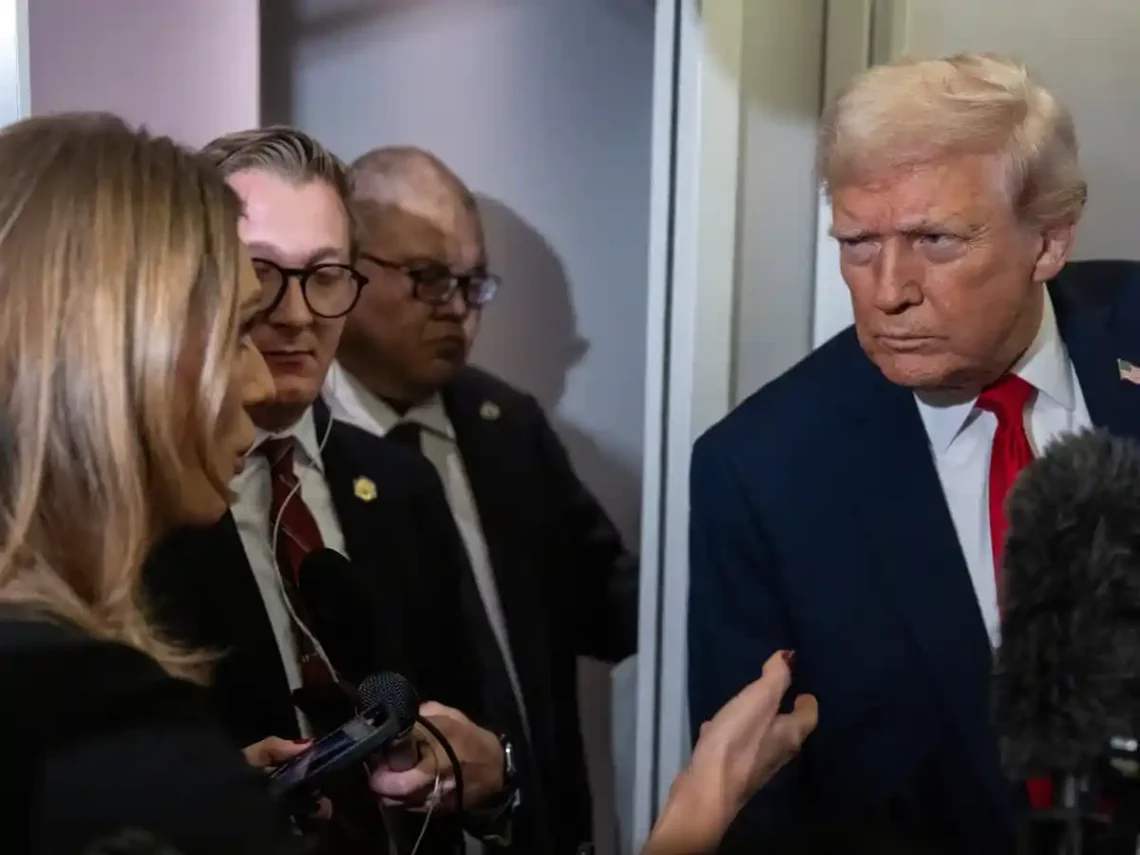
President Donald Trump told MS NOW White House correspondent Akayla Gardner to “be quiet” during a tense exchange with reporters outside the White House on Saturday, September 26, 2026. The incident came just days after a federal judge ordered the Trump administration to restore White House access for CNN, MS NOW and Politico, three news organizations that had been barred from the White House.
The confrontation has drawn renewed attention to the relationship between the Trump administration and the White House press corps, as well as the ongoing legal dispute over press access and First Amendment protections.
Gardner questioned Trump about whether he wanted only news organizations that supported him to participate in the White House press pool. Trump rejected that characterization and said he wanted “real news” rather than what he described as “fake news.”
When Gardner followed up by asking whether Trump did not want journalists to ask tough questions, Trump interrupted her and told her to “quiet.” The exchange occurred as Trump was preparing to leave Washington for Tennessee.
Trump Tells MS NOW Reporter Akayla Gardner to ‘Be Quiet’
The exchange between Trump and Akayla Gardner happened outside the White House as reporters questioned the president before his departure.
Gardner asked Trump whether his administration wanted only media organizations that supported him to have access to the White House press pool. The question followed the administration’s recent decision to remove CNN, MS NOW and Politico from White House access.
Trump responded that he wanted “real news” and not what he called “fake news.” He also criticized the outlets and discussed their audience ratings.
Gardner then pressed the president about whether his objection was related to journalists asking difficult questions.
Trump interrupted her and said, “Wait wait, quiet,” before continuing his criticism of what he described as fake news.
The exchange quickly became part of the broader discussion surrounding the White House press corps, particularly because it followed a major court ruling concerning media access.
Federal Judge Orders White House to Restore Media Access
The confrontation came shortly after U.S. District Judge Timothy Kelly issued a temporary restraining order requiring the Trump administration to restore access for CNN, MS NOW and Politico.
The three news organizations had been barred from the White House after the administration criticized their reporting. The outlets subsequently challenged the decision in federal court, arguing that the restrictions violated their constitutional rights.
Judge Kelly ordered the White House to “immediately return, reinstate, and restore” the outlets’ access. The order was temporary and applied for 14 days while the broader legal dispute continued.
The judge said the news organizations had met the legal requirements for temporary relief and were likely to succeed in showing that their press credentials had been revoked without sufficient due process.
Kelly also questioned the standards used by the administration to justify the restrictions, describing the government’s stated standard for objectionable reporting as insufficiently clear.
Why CNN, MS NOW and Politico Were Banned
The White House media dispute began when the administration moved against CNN, MS NOW and Politico.
President Trump publicly criticized the organizations’ reporting and referred to what he considered false or unfavorable coverage. The administration later argued that certain reporting raised national security concerns.
According to court filings reported by the Associated Press, the administration cited several specific reporting incidents. These included CNN coverage of construction details related to an East Wing bunker, MS NOW reporting involving an alleged leak investigation, and Politico reporting concerning funding for the proposed White House ballroom and security improvements.
The news organizations disputed the administration’s reasoning. Their legal challenge argued that government officials cannot selectively restrict press access because they dislike the content of a news organization’s reporting.
The dispute therefore became about more than which journalists could enter the White House. It raised broader questions about how the government determines press access and whether restrictions can be imposed based on the content or viewpoint of journalism.
Judge Timothy Kelly and the White House Press Access Case
Judge Timothy Kelly is a federal judge appointed by Trump during his first presidential term. He has previously handled a White House press-access dispute involving CNN journalist Jim Acosta.
In the current case, Kelly emphasized that the government must follow established legal standards when taking action that affects press credentials.
The court’s temporary order did not resolve every issue surrounding White House media access. Instead, it temporarily restored access while the lawsuit continues.
The judge also rejected the administration’s initial national security justification as insufficiently supported by the evidence presented to the court. According to the Associated Press, Kelly wrote that the record did not establish that national security concerns motivated the revocation of the outlets’ press passes.
The case remains part of an ongoing legal dispute over presidential authority, press access and constitutional protections.
CNN, MS NOW and Politico Return to the White House
Following Judge Kelly’s ruling, journalists from CNN, MS NOW and Politico returned to the White House.
The process was not immediate. According to the Associated Press, White House officials said they needed time to locate, reactivate and distribute the affected journalists’ credentials. The process reportedly took more than two hours.
Once the access restrictions were lifted, journalists from the three organizations were able to resume coverage from the White House grounds.
However, the legal dispute did not completely disappear.
CNN’s role in the White House television video pool remained a separate issue. The video pool involves major television networks that rotate responsibility for recording presidential events and sharing footage with other news organizations.
The dispute over CNN’s removal from the pool contributed to a temporary disruption in traditional television coverage of presidential events.
What Is the White House Press Pool?
The White House press pool is an important part of presidential news coverage.
Because it is not practical for every news organization to have journalists and cameras at every presidential event, a smaller group of journalists often provides shared coverage that can be distributed to other organizations.
The television pool has traditionally involved major U.S. networks rotating coverage responsibilities.
The recent dispute involving CNN raised questions about who should determine which organizations participate in the pool and whether the White House should have authority to remove a news organization from those arrangements.
The Associated Press reported that the other major television networks declined to simply replace CNN after the White House removed it from scheduled pool duties. This resulted in disruptions to live coverage of some presidential events.
The disagreement therefore affected not only the three organizations directly involved in the lawsuit but also the broader system used by journalists to cover the president.
First Amendment Issues in the White House Media Ban
The legal dispute involving Trump, CNN, MS NOW and Politico centers partly on the First Amendment.
The First Amendment protects freedom of speech and freedom of the press in the United States. However, questions about physical access to government facilities can involve additional legal considerations, including government security, administrative authority and due process.
The news organizations argued that the White House media restrictions were based on the content of their reporting and therefore violated constitutional protections.
The Trump administration took a different position, arguing that access to the White House is a privilege and that the president has authority over access to the presidential complex.
During the court proceedings, Justice Department attorney Michael Velchik argued that White House access is a privilege rather than a constitutional right.
Judge Kelly’s temporary ruling did not establish a final resolution of every constitutional question. Instead, it found that the outlets had met the legal standard for temporary relief while the case proceeds.
Trump’s Long-Running Conflict With the Media
The latest exchange with Gardner is part of a much longer relationship between Trump and news organizations that has frequently involved public criticism and confrontations.
Trump has repeatedly accused certain media outlets of unfair or inaccurate reporting and has used the term “fake news” when criticizing coverage he disputes.
The administration’s recent restrictions involving CNN, MS NOW and Politico represent another stage in that broader conflict.
The Associated Press reported that the three outlets sued the administration after their White House access was revoked. The organizations argued that the restrictions were connected to their reporting and therefore raised First Amendment concerns.
The current case also follows earlier disputes between the Trump administration and individual news organizations over access to presidential events.
These repeated conflicts have placed White House press access under increased legal and public scrutiny.
Trump’s Comments About Women and Leadership
During the same exchange with reporters on September 26, Trump was also asked about remarks by former President Barack Obama concerning women in government.
Obama had suggested that governments led by women could potentially perform better in some circumstances. Trump rejected that idea, calling the statement “ridiculous,” while also saying that he loves and thinks highly of women.
Those comments were reported alongside the exchange with Gardner, adding another dimension to the day’s interaction with reporters.
The remarks, however, were separate from the legal dispute involving White House press access.
What Happens Next in the White House Media Case?
The judge’s order restoring CNN, MS NOW and Politico access was temporary. The underlying lawsuit remains important because the court will continue examining whether the administration acted lawfully when it revoked the organizations’ press credentials.
The case could help clarify how much authority a presidential administration has to control access to the White House press operation, particularly when the restrictions involve criticism of a news organization’s reporting.
Another important question is what standards the government must establish before revoking press credentials.
Judge Kelly’s ruling indicated that vague standards can create legal problems when government action affects journalists’ access to official institutions.
The case could therefore have implications beyond CNN, MS NOW and Politico. The outcome may influence future disputes involving presidential administrations, government press access and news organizations.
Why the Trump and Akayla Gardner Exchange Matters
The moment when Trump told Akayla Gardner to “be quiet” occurred against the backdrop of a much larger dispute over media access.
On its own, the exchange was a brief confrontation between a president and a journalist. But it occurred only days after a federal judge ordered the administration to restore access for three news organizations that had been banned from the White House.
That timing has made the interaction part of a wider national discussion about the relationship between the president and the press.
The legal dispute will ultimately focus on constitutional and administrative questions rather than on a single exchange between Trump and a reporter.
For journalists, government officials and news organizations, the central issue is how presidential press access should operate while still allowing the government to manage security and official facilities.
White House Media Ban and Press Freedom Debate Continues
The dispute involving Donald Trump, Akayla Gardner, CNN, MS NOW and Politico is still developing.
Trump has maintained that his administration supports a free press while criticizing news organizations he considers unreliable or biased. The affected outlets, meanwhile, have challenged the restrictions in federal court and argued that government access decisions cannot be based on unfavorable reporting.
Judge Timothy Kelly’s temporary order restored access to the three organizations, but it did not end the underlying legal battle.
As the case continues, the questions surrounding White House press access, the First Amendment, due process and presidential authority are likely to remain significant parts of the discussion.
The exchange between Trump and Akayla Gardner has therefore become one visible moment in a much broader dispute over how the White House interacts with the American news media and how the law defines the limits of government control over press access.
Sources
The Independent, “Trump tells female reporter to ‘be quiet’ and slams Obama’s claim that a world run by women would be better” Read the full report
Associated Press, “3 US news outlets return to White House after judge orders Trump to lift ban” Read the Associated Press report
Associated Press, “Judge blocks Trump’s ban and says CNN, MS NOW and Politico must have White House access restored” Read the court ruling report
Associated Press, “News outlets sue Trump over lost White House access, citing ‘blatant violation’ of First Amendment” Read the lawsuit report


You May Also Like

What Everyone Is Saying About Coachella in Group Chats
Why Group Chats Define Real Conversation in 2026