Your Fall Personality Might Be Hiding In Your Closet
Fashion Week may happen on runways, but its biggest influence often begins after the shows are over. A designer can send an entire collection down the runway, celebrities can fill the front rows, photographers can capture every detail and editors can spend days analyzing what is coming next, but the real test of a fashion moment is what happens when women start taking those ideas into their own lives. That is when a runway trend becomes something more personal. It becomes a color someone suddenly wants to wear, a silhouette she wants to try, a styling trick she recreates with clothes she already owns or even a completely different interpretation of a look that caught her attention. And that is where fashion becomes less about following trends and more about discovering personality.
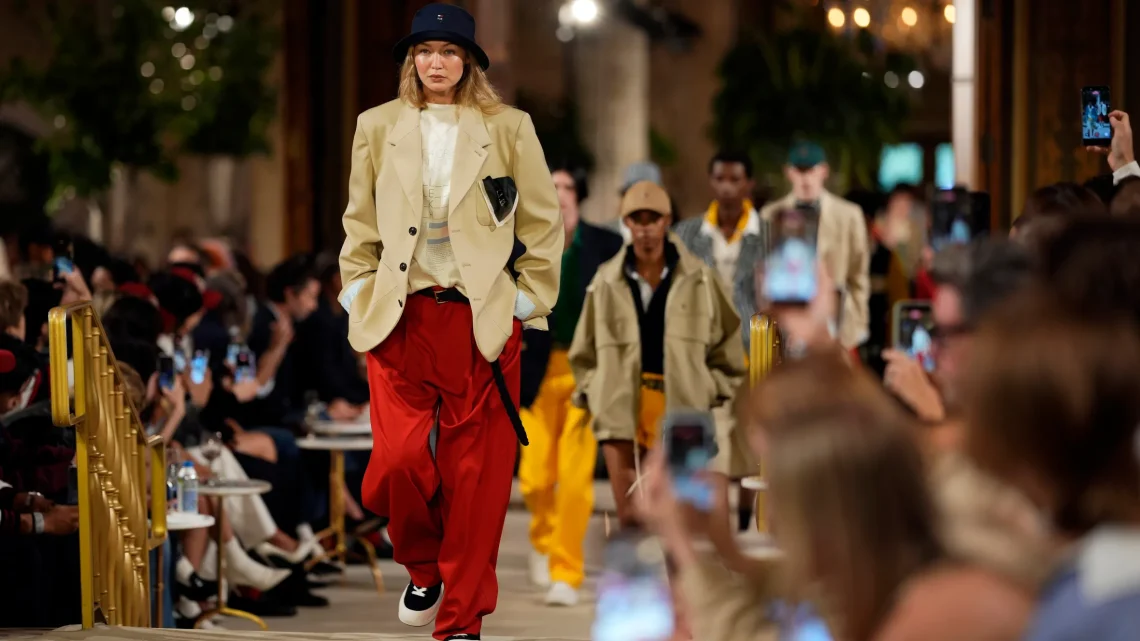
New York Fashion Week has once again turned the city into a giant mood board, but the most interesting part is not necessarily what designers are putting on the runway. It is the way women outside the shows are interpreting fashion for themselves. Street style has always been one of the best reminders that clothing does not come with a single set of instructions. One woman might see an oversized jacket and pair it with a fitted skirt, while another wears hers with jeans and sneakers. Someone might take a romantic dress and make it feel edgy with boots, while another adds a cardigan and turns it into something soft and casual. The same trend can become completely different depending on who is wearing it, and that is exactly why personal style is so much more interesting than simply knowing what is fashionable.
This season’s fashion conversation is particularly useful for women who sometimes feel overwhelmed by the constant pressure to keep up. Every week seems to bring another “must-have” item, another aesthetic, another color that is suddenly everywhere and another prediction about what everyone will supposedly be wearing next. Social media can make fashion feel like a race, as though there is always another trend you need to discover before it disappears. But you do not have to wear everything that becomes popular. You do not even have to like it. Fashion can give you ideas without giving you rules, and one of the easiest ways to develop stronger personal style is to stop asking what you are supposed to wear and start paying attention to what you naturally gravitate toward.
Think about the clothes you reach for when you want to feel good. There is probably a reason those pieces have become your favorites. Maybe you always feel more confident in a structured blazer. Maybe oversized sweaters make you feel relaxed and comfortable. Maybe you love dresses because they make getting dressed easier. Maybe black is your comfort zone, or perhaps you feel happiest when your outfit has a bright color somewhere in it. Maybe you are drawn to sneakers because you like being able to move around without thinking about your shoes. These preferences may seem small, but together they create a picture of your personal style. Your closet is often telling you who you are before you have even put the words together.
That is why a trend can look incredible on someone else and still not feel right on you. Fashion is not an exam where you receive extra points for getting the look exactly right. A piece can be beautiful, expensive and incredibly fashionable while still having absolutely no place in your wardrobe. The opposite can also be true. Something that is no longer considered the newest trend might be the item that makes you feel most like yourself. Personal style is not about collecting everything that fashion says is important. It is about recognizing the things that make you feel comfortable, confident and expressive and allowing those things to become part of your visual identity.
Confidence plays a much bigger role in fashion than people sometimes realize. When you genuinely like what you are wearing, you tend to stop thinking about it so much. You are not constantly checking whether the outfit looks right or wondering whether someone else approves. You simply move through your day. The clothes become an extension of you rather than something you are trying to manage. That is often the difference between wearing a trend and actually making it your own. The most memorable outfits are not always the most expensive or dramatic ones. Sometimes they are simply the outfits where the person wearing them looks completely comfortable being herself.
Fashion Week may set the trends, but your closet decides which ones actually become part of you.
New York has always been particularly good at that kind of fashion freedom. The city’s street style rarely feels like everyone is following exactly the same formula. There is usually something unexpected happening, whether it is a vintage piece mixed with something modern, an oversized silhouette paired with something delicate, a polished coat worn with casual sneakers or a simple outfit transformed by one unusual accessory. Current NYFW street-style coverage has once again shown women experimenting with proportions, colors, layering and accessories rather than simply copying complete runway looks. Vogue’s coverage of the Spring 2027 shows, for example, has highlighted the wide variety of personal interpretations appearing around the shows.
That is the part of Fashion Week worth paying attention to if you are trying to understand your own style. Instead of asking, “What is everyone wearing?” ask yourself, “What do I actually like about this?” Maybe it is the color. Maybe it is the shape. Maybe it is the way the outfit combines something feminine with something oversized. Maybe it is the confidence of the person wearing it. Once you identify what attracts you, you can begin experimenting without needing to recreate the entire look. You might not need a new wardrobe at all. You might only need to look at the one you already have differently.
That is especially true as fall arrives. Fall fashion naturally creates more opportunities to experiment because layering gives familiar pieces new possibilities. A dress you wore during warmer weather can suddenly feel completely different with a jacket and boots. A simple pair of jeans can look new with an oversized coat. A skirt can be styled with a sweater, a blazer or even a sweatshirt. A scarf can completely change an otherwise basic outfit. You can take pieces you have owned for years and combine them in a way you have never tried before. Sometimes the easiest way to refresh your style is not to buy something new but to stop wearing the things you already own in the same way.
That is where your fall personality may be hiding. Maybe you are more adventurous than you thought. Maybe you have been saving a statement jacket because you were worried it was “too much.” Maybe you own a beautiful dress that you only wear for special occasions even though you could style it casually. Maybe you have a pair of boots that could completely change your favorite jeans. Maybe there is a color you have always avoided because you assumed it would not suit you. Fashion gives you permission to experiment, but you do not need permission from anyone else to decide what works.
There is also something empowering about realizing that personal style does not have to remain consistent every single day. You can be minimalist one day and dramatic the next. You can love soft, feminine clothes and still enjoy oversized tailoring. You can wear sneakers most of the week and heels when you feel like dressing up. You can be drawn to vintage fashion without wanting to look like you stepped out of one particular decade. Your personality is not one fixed aesthetic, so there is no reason your wardrobe has to be one either. The most interesting personal styles often come from contradictions because those combinations are what make an outfit feel individual rather than copied.
Fashion becomes even more interesting when you realize how much of it is shaped by ordinary people after the runway show ends. Designers may introduce a silhouette, color or styling idea, but women decide what happens next. They adapt it to their bodies, their jobs, their budgets, their climates, their lifestyles and their personalities. Someone might see a runway look and recreate it with thrifted pieces. Someone else might find a similar item at a local store. Another person might take only one detail from the outfit and combine it with something already hanging in her closet. Eventually, the original runway idea can become something completely different, and that is not a failure of the trend. That is how fashion becomes culture.
The internet has made this process even faster. A look can appear at a Fashion Week show in the morning and inspire thousands of interpretations by the afternoon. But there is a downside to seeing so many trends at once. When every scroll introduces another aesthetic, it can become difficult to know what you genuinely like and what you simply like because you have seen it twenty times. There has been growing discussion around the pressure of algorithm-driven fashion and the desire for personal style that feels more authentic and less dictated by online trends. That makes the idea of shopping your own closet more appealing than ever. Before buying another version of what the internet says is trending, look at what you already own and ask whether there is a way to make it feel new.
Your closet can also tell you when your style has changed. The clothes that once made perfect sense may suddenly feel disconnected from the person you are becoming. Maybe your lifestyle is different. Maybe your confidence has changed. Maybe your priorities are different. Maybe you simply grew tired of dressing the way you used to. That does not mean your old style was wrong. It means you are allowed to evolve. Personal style should change as your life changes, and there is no reason to force yourself back into an aesthetic simply because it once felt like you.
This is why Fashion Week can be inspiring even if you never plan to buy a runway piece. You are not necessarily looking at the clothes and thinking, “I need that exact outfit.” You might simply be looking for an idea. You might see a particular way of layering and realize that you can try it with clothes you already have. You might notice a color combination that you never considered before. You might see someone wearing something completely unexpected and realize that you have been playing it too safe. Inspiration does not require imitation.
There is also a difference between being inspired by fashion and being controlled by it. Inspiration gives you options. Pressure makes you feel as though you have to keep up. The healthiest relationship with fashion is somewhere in between. You can enjoy trends without allowing them to decide your identity. You can try something new without deciding that your entire wardrobe needs to change. You can love a runway look and still decide that it is not for you. You can repeat your favorite outfit without worrying that somebody online has already seen it.
In fact, repeating an outfit can be its own form of confidence. There is something very comfortable about knowing exactly what works for you and not feeling the need to constantly prove that you have something new to wear. A favorite jacket can become part of your signature. A particular pair of jeans can become the foundation of dozens of outfits. A certain lipstick, handbag or pair of shoes can become something people associate with you. Personal style is not necessarily about constant change. Sometimes it is about recognizing the things that work and making them yours.
That is particularly important for girls and young women who are still figuring out who they are. Fashion can be a fun form of experimentation, but it can also create unnecessary pressure. You do not need to look like an influencer, celebrity or model to have great style. You do not need a huge wardrobe. You do not need designer labels. You do not need to follow every trend. You need room to experiment and the confidence to decide what feels right for you. Sometimes the best outfit is not the one that receives the most attention. It is the one that lets you walk through your day feeling comfortable in your own skin.
As Fashion Week moves on, the runway will eventually disappear from the headlines. The shows will end, the collections will be packed away and the fashion crowd will move on to the next city. But the influence will continue in quieter ways. A woman will buy a jacket because she saw a similar shape on the runway. Someone will recreate a street-style look with clothes from a thrift store. Another woman will pull an old dress out of her closet and style it completely differently. Someone else will decide that the trend is not for her and keep wearing the clothes she already loves. All of those choices are part of the fashion conversation.
And that may be the most important thing Fashion Week can teach us about personal style. The runway is not the final destination. It is the beginning of a conversation. Designers offer ideas, celebrities amplify them, social media spreads them and ordinary women decide what survives. What eventually becomes part of everyday culture is not always the most expensive look or the most photographed collection. It is often the idea that people find useful enough, beautiful enough or exciting enough to make their own.
So before you decide that you need a completely new wardrobe for fall, take another look at the one you already have. Notice what you keep reaching for. Notice what makes you feel confident. Notice what you never wear and ask yourself why. Try combining pieces differently. Wear something you have been saving. Add a color you normally avoid. Mix something polished with something casual. Let yourself look a little different without deciding that you have to become someone else.
Your fall personality might already be there.
It may be hiding underneath the clothes you forgot you owned, waiting for you to style them differently. It may be in the jacket you always reach for, the color you cannot stop buying or the pair of shoes that somehow make every outfit feel better. It may even be in the fact that you keep breaking the rules without realizing it. Fashion Week can show you what is coming next, but your closet can tell you what already feels like you.
And that is where real style begins: not with following the runway, but with taking the inspiration and turning it into something that could only belong to you.
References
Vogue — Street Style From the Spring 2027 New York Shows

You May Also Like
Gen Z Streetwear Trends: Oversized Fits, Sneakers, and Bold Expression

The Return of Y2K Fashion: Why Early 2000s Trends Still Rule